Learning how to become an influencer isn't about chasing a million followers: it's about building a community that trusts you and turning that trust into income. The good news is that brands mainly look for micro and nano-influencers (10-100K) because they convert better. Here's the roadmap, from zero to your first collabs.
What exactly is an influencer?
An influencer is a content creator whose recommendations carry weight in their audience's decisions. The word brings Instagram stars to mind, but the reality of the job in 2026 is far more accessible: what matters isn't the raw size of your account, but your engagement and your credibility on a precise topic.
That's the whole point of aiming for micro rather than the masses. We explain why in our comparison micro vs nano-influencer.
Why bet on micro and nano
- Higher engagement: a small, targeted community interacts and buys far more than a large, lukewarm audience.
- Intact credibility: your followers see you as a real person, not as an advertising billboard.
- Easier access to brands: many programs and campaigns open up from just a few thousand engaged followers.
So you don't need to wait until you're "big" to start. You can begin monetizing right now.
The 5-step roadmap
| Step | Goal | What you activate |
|---|---|---|
| 1. Choose your niche | A coherent, targeted audience | Your positioning |
| 2. Post regularly | Build engagement and trust | Your consistency |
| 3. Set up a pro page | Centralize your recommendations | Your link in bio |
| 4. Monetize | Generate your first income | Affiliate + collabs |
| 5. Prepare your media kit | Convince brands | Your business card |
1. Choose your niche
Recommend what you actually know and use (beauty, tech, lifestyle, fitness…). A clear niche attracts a coherent audience and reassures brands about your followers' profile. Better to be the reference on a small topic than lost in the generalist crowd.
2. Post content regularly
Consistency beats perfection. A sustainable rhythm (for example a few posts a week) sustains your engagement and makes you legible to the algorithm and to brands alike. That's what builds, week after week, your community's trust.
3. Set up a pro page
On Instagram or TikTok, you only have one link in your bio. It's your showcase. Instead of putting a single lost link there, gather everything you recommend in one place with a real link-in-bio page: your products, your promo codes, your links, your socials. It's the hub that turns your followers into clicks, 24/7.
On Spotilink, you build each recommendation card yourself, your photo, your take, your promo code, your link, and you keep 100% of your affiliate commissions. For collabs settled via Spotilink's secure payment (optional), a 5% service fee + Stripe fees applies.

Helena Yung
Beauty & Lifestyle
My favourite
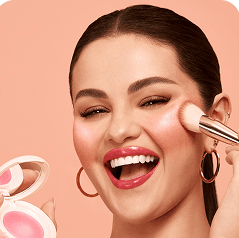
Rare Beauty
Soft Pinch Blush
« My holy grail »
My skincare routine
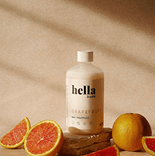
Hella
Grapefruit
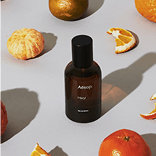
Aesop
Mandarin
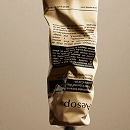
Dosage
Coffee
My essentials


Poll
Your skincare routine?
4. Monetize: affiliate marketing + collabs
There are two complementary pillars to earn a living:
- Affiliate marketing: you recommend products via unique links and earn a commission on every sale. It's the fastest revenue to launch, even with a small audience.
- Collaborations: a brand pays you (or gives you products) to create content. It's often an influencer's first real "paycheck."
To cross the threshold of your first paid collab, follow our guide to landing your first collaboration.
5. Prepare your media kit
When a brand takes an interest in you, they want to see your numbers at a glance: audience, engagement, content examples, rates. That's the role of the media kit, your professional business card. We show you how to build it in our guide create your media kit.
The classic beginner's mistake
Waiting to have "enough" followers before starting to monetize. It's the opposite: you build your credibility by recommending from the start, cleanly and transparently. An audience of 3,000 people who trust you can already generate commissions and interest brands, provided your recommendations are legible and centralized, not scattered across stories.
Get the legal basics right
As soon as you generate regular income, affiliate commissions, paid collabs, you must declare it. In most countries the simplest path to start is registering as self-employed (a sole proprietorship or equivalent): usually light setup and accounting, and you report your earnings to your local tax authority. You typically pay tax and contributions on what you actually earn, which suits income that starts off slowly. The exact status (sole proprietorship, LLC, etc.) and the thresholds vary by country, so check your local rules or an accountant before your first paid work. Also think about legal transparency: sponsored content must always be identified as such to your audience, most jurisdictions now require it.
How much does a beginner influencer earn?
It's impossible to give a reliable figure: everything depends on your niche, your engagement rate and your consistency. At first, affiliate marketing often brings in a few euros to a few tens of euros a month, while your community and your clicks build up. The first paid collabs frequently run from a few tens to a few hundred euros per piece of content, with no guarantee whatsoever. The healthiest view is to see this early income as validation of your approach rather than a salary: it's consistency that makes it grow.
Choosing and testing your niche
Hesitating between several topics? Post for a few weeks on two or three angles and watch what sticks: which content generates the most engagement, messages and shares. Your editorial line often becomes clear through practice, not on paper. The goal is to find the intersection between what you enjoy producing, what your audience asks for, and what monetizes, meaning the presence of brands and affiliate programs on the topic.
Basic gear and tools
Good news: you don't need a studio. A recent smartphone, natural light (or an entry-level ring light) and a free editing app are more than enough to start. On the organization side, keep handy a tool to plan your content, a place to track your statistics, and a link-in-bio page to centralize your recommendations. Invest in more advanced gear only when your income justifies it, not before.
How long before the first results?
Let's be honest: becoming an influencer takes months, rarely weeks. The first signs, steady community growth, a rising engagement rate, first affiliate clicks, often appear after several months of consistent posting. The first collabs generally arrive once your positioning is legible and you have something to reassure a brand with. Consistency is your best ally: most of those who give up do so just before it takes off.
The mistake that stalls most beginners
Almost everyone stalls at the same place, and it isn't talent or gear. It's posting without a destination.
You publish, the reach comes, people get curious, and then they land on a profile with a bio that names a job title and a link that goes to a homepage. The interest evaporates in the two seconds it takes to decide there's nothing here.
Fixing that costs nothing and happens before your next post. Say in one line what someone gets from following you, and point your single link at something specific enough to be worth a tap. Do that from day one, while the audience is small, so that every bit of reach you earn afterwards actually lands somewhere.
In summary
Becoming an influencer in 2026 is less a question of size than of consistency, niche and trust. Choose your topic, post relentlessly, centralize your recommendations on a pro page, then activate affiliate marketing and collabs. Micro and nano aren't a consolation prize: they're exactly the profile brands are fighting over.