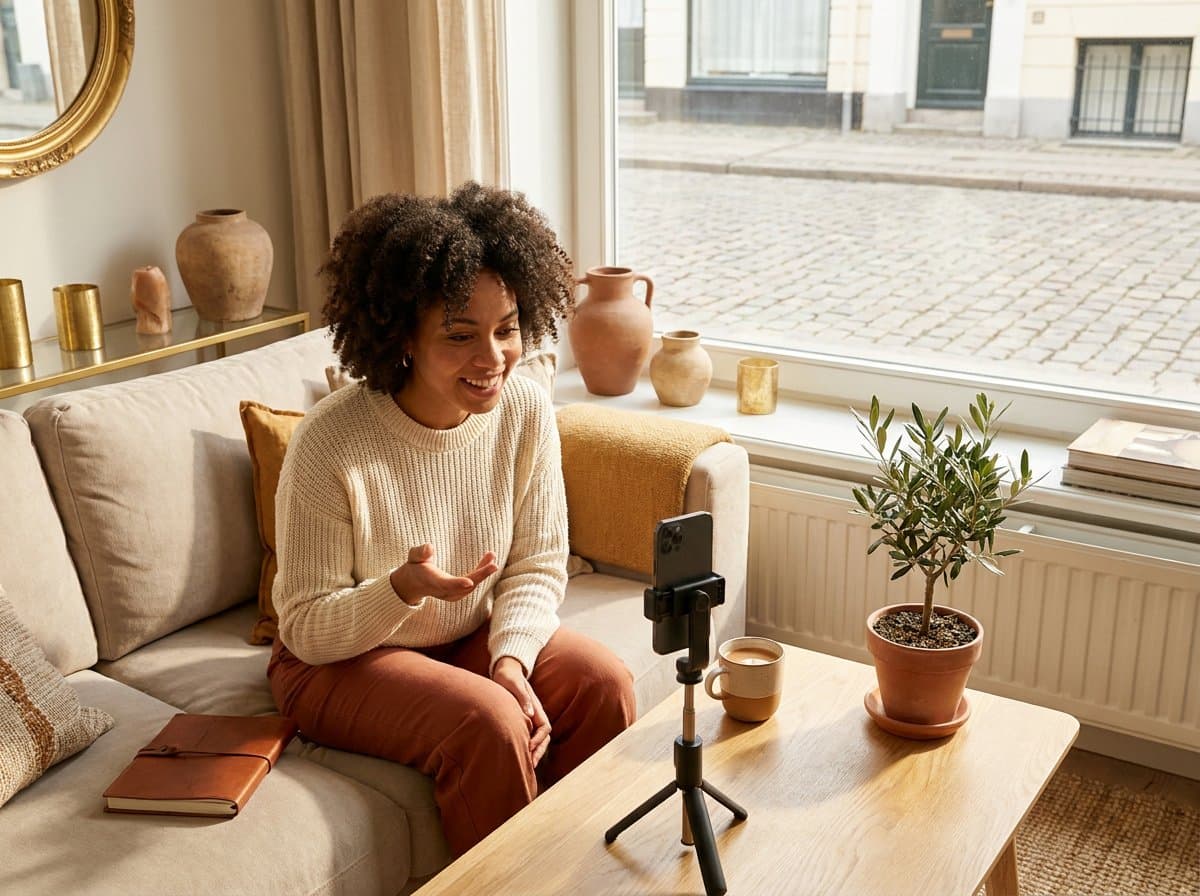
To land your first brand collaboration, you don't need to wait for tens of thousands of followers: brands favor engagement over raw size, and that's precisely what makes a micro or nano-influencer profile attractive. You target the right brands, you send a short, personalized pitch, and you present a creator page that already shows how you put a product in the spotlight. Here's the step-by-step.
Before reaching out: prepare your ground
A brand that gets your message will Google you in two seconds. Before writing to anyone, make sure you have:
- A clear niche: people should understand your world at a glance.
- A media kit ready to send (audience, engagement, content examples, rates). It's your business card: we show you how to build it in the guide create your media kit.
- A polished link-in-bio page, where your recommendations are already presented as cards. It's concrete proof that you know how to showcase a product. If you're starting from scratch, see what Spotilink offers creators.
Where to find brands to contact
Two approaches complement each other. Direct research first: spot the brands you already use, those mentioned by creators in your niche, or those sponsoring accounts close to yours. It's the most natural route, because the fit is obvious. Then, matchmaking platforms between brands and creators (affiliate programs, influence marketplaces): you create a profile and brands find you, or you apply directly to their campaigns. It's useful for multiplying opportunities, but never neglect the direct approach, often more qualitative for a first collab.
The types of collaborations you can propose
A first collab doesn't have to be a paid post. Knowing the formats helps you pitch the right one:
- Gifting. The brand sends a product; you post if you like it. Low commitment, and often how a relationship starts.
- Sponsored post. A paid piece of content, the classic deal once you have a bit of proof.
- Affiliate. You're paid per sale via a code or link; great when you can't yet command a flat fee.
- UGC (user-generated content). You produce content the brand uses on its own channels, no big audience required, paid per delivery.
- Ambassadorship. A longer, repeated partnership at a better rate; usually the second step, not the first.
For a first collab, gifting or a small sponsored post is the most realistic ask.
How to contact a brand for a collaboration
- Target 10 brands you actually use. Fit with your audience weighs more than fame. A small, aligned brand will reply faster than a giant.
- Find the right contact. Look for the influence, partnerships or marketing team on the site, on LinkedIn, or via Instagram DM. Aim for a real person rather than a generic
contact@address. - Write a short pitch. In 4-5 lines: who you are, your audience, why this brand specifically, and a concrete content idea. Personalize it: a copy-paste is spotted instantly.
- Attach your media kit and the link to your page. You give them everything they need to say yes without having to get back to you.
The pitch that converts isn't "I want to collaborate" but "here's the content idea I'd make for you." You show your value before asking for anything.
An example of a pitch that converts
Concretely, your pitch can look like this: "Hi [first name], I'm [your name], I create [niche] content for a highly engaged community of [X] followers. I already use [product] and I'd love to showcase it through [specific idea: a test Reel, a how-to story…]. I'm attaching my media kit and the link to my page. Would you be open to discussing it?" Short, personalized, a concrete content idea and a clear call to action: that's exactly what it takes to stand out in an inbox full of copy-pastes.
Presenting your page: your best proof
A media kit tells what you can do; your link-in-bio page shows it. When a brand opens your link and sees your products laid out as cards, your photo, your take, a one-click promo code, they immediately picture it: "this is how she'd talk about us."

Helena Yung
Beauty & Lifestyle
My favourite
Rare Beauty
Soft Pinch Blush
« My holy grail »
My skincare routine
Hella
Grapefruit
Aesop
Mandarin
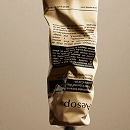
Dosage
Coffee
My essentials


Poll
Your skincare routine?
That's exactly what you build with a Spotilink link-in-bio page: a showcase of recommendations where each card is built by hand, behind your single Instagram or TikTok link. You send it in your pitch, and the brand grasps your value without guessing.
-10%Rare Beauty
Soft Pinch Blush
“My must-have blush: one swipe and it lasts all day.”
How to get paid for a collaboration
Before producing any content, frame everything in writing: the format (story, post, video…), the deadlines, the usage rights and the rate. If you're starting out, you can ask for their terms rather than putting forward a price.
On the payment side, the brand pays you directly. Once you start earning, you'll usually need to be registered as self-employed (or run a small business) so you can invoice the brand and report the income, the exact setup (sole proprietorship, LLC, etc.) and the thresholds vary by country, so check your local tax authority or an accountant. A page tool like Spotilink takes nothing from your affiliate earnings. For collabs settled via Spotilink's secure payment, a 5% service fee + Stripe fees applies; otherwise you keep 100% of your fee.
Setting your rate for a first collab
No official rate card exists, and that's fine when you're starting: you can ask for the brand's budget rather than name a number. As a rough compass, nano creators often see €50–€200 per sponsored post, more for video, exclusivity or usage rights. Price what you're comfortable defending, factor in the deliverables (a Reel is worth more than a story), and remember that exclusivity and reuse of your content have real value, charge for them. A clear rate signals a professional, not an amateur.
Should you accept collabs in exchange for products?
When starting out, many brand partnerships happen in exchange for products rather than cash. It's not a bad deal if the product has real value to you and feeds your portfolio: you get content, a reference and a relationship. Still, set a limit. If the brand asks for several deliverables, extended usage rights or exclusivity, the gift is no longer enough, switch to a paid fee and proper invoicing. Keep in mind that your time has a cost, even without a fee at stake.
Collabs to be wary of
Not every offer deserves a yes, even at the start. Watch for:
- "Exposure" instead of pay on real work, a repost is not a fee.
- Broad or perpetual usage rights slipped into a small deal: your content in their ads for years is worth far more.
- Vague briefs and no written terms, they lead to endless revisions and unpaid extras.
- A product that doesn't fit your audience. One off-brand promo can cost you the trust that makes brands want you in the first place.
A clear no protects the credibility every future collab depends on.
Turn one collab into an ongoing partnership
The real money isn't the first deal, it's the fifth with the same brand. To get there, be the creator brands want to rebook: communicate clearly, hit your deadlines, deliver on the brief and add a little extra, then send a short recap of how the content performed (reach, clicks, saves). That recap is your best argument for the next collab, at a higher rate. Do it well and a one-off becomes an ambassadorship, a repeated, better-paid partnership, turning scattered deals into steady income.
The first collab unlocks the next ones
The hardest part is the first. Once a successful collaboration is in your portfolio, your media kit gets stronger and the next brands take you more seriously. All of this fits into a broader approach: find the big picture in our guide to becoming an influencer.
In summary: aim right, pitch short and personalized, and let your link-in-bio page prove on your behalf that you know how to make a product shine.