
A media kit is the presentation document that sums up your creator profile for brands: who you are, your statistics, your audience, your examples and your rates. It's the tool that turns "I want collabs" into "here's why you should work with me."
This article breaks down what to write in each of the five sections. If you are starting from scratch and want the bigger picture first, begin with our influencer media kit guide.
What exactly is a media kit?
It's your professional creator business card. When a brand spots you, or when you reach out to them, they want to quickly assess whether your audience matches their target. A clear media kit gives them all the answers at a glance, without having to dig through your account. It can be a PDF, a shareable link, or embedded directly into your link-in-bio page.
Building a media kit is one of the must-do steps when you want to become an influencer and turn a hobby into a real activity.
Media kit, press kit or rate card: which one do you need?
The three names get used interchangeably, and sending the wrong document makes you look like you've done this before when you haven't.
- A media kit is yours as a creator. It presents you: audience, reach, engagement, past collaborations and what you offer a brand. This is the one a brand asks for when it's considering working with you.
- A press kit belongs to a company or a product. It gathers logos, product photos, boilerplate copy and press contacts, so journalists can write about it without asking. If a brand sends you one, it's material for your content, not a template to copy.
- A rate card is the pricing sheet alone: deliverables and prices, nothing else. Some creators keep it separate from the media kit precisely so they can send figures only once the conversation is serious.
The practical call: keep one media kit that presents you, and decide whether your rates live inside it or in a separate rate card. Putting prices in the main document speeds up qualification and filters out budgets that were never going to work. Leaving them out gives you room to price by scope. Neither is wrong, but pick one and be consistent, because sending different versions to different brands is how you end up contradicting yourself.
The 5 sections of a media kit that converts
| Section | What you put in it | What the brand looks for |
|---|---|---|
| 1. Introduction | Who you are, your niche, your photo | Understand your world in 10 s |
| 2. Statistics | Followers, engagement, views | Honest, verifiable numbers |
| 3. Audience | Age, gender, countries, interests | Whether your public fits their target |
| 4. Examples | 3-5 pieces of content and past collabs | Concrete proof of your work |
| 5. Rates and contact | Indicative rate card, email, link | Being able to say yes easily |
- Introduction. Who you are, your niche, your editorial voice and what makes you unique. A few lines, a quality photo, your positioning. The brand should understand your world in ten seconds.
- Key statistics. Your honest numbers: followers per platform, average engagement rate, views and reach. Real, modest stats inspire more trust than big, fuzzy figures, a serious brand checks. It's this engagement, more than the raw follower count, that makes a micro or nano-influencer profile attractive.
- Audience. Who follows you: age range, female/male split, top countries, interests. This is often the most scrutinised section: a brand buys your audience, not just you.
- Content and collab examples. Your 3 to 5 best posts or videos, and past collaborations with their results. Concrete proof reassures more than any promise.
- Rates and contact. An indicative rate card (post, story, video, package) and a clear way to reach you: a pro email and a link to your page. The easier you are to contact, the more proposals you get.
Your media kit doesn't need to be a frozen PDF. A polished online page is easier to share, always up to date, and already gives a living preview of your work.
Which statistics to include (and where to find them)
Not all stats are equal. The ones brands scrutinise most are reach (the real spread of your content), the average engagement rate, your audience demographics (age, gender, country) and your story and Reels views, often more telling than the plain follower count. You'll find all of this in the native statistics on Instagram (the "Insights" of a pro account) and TikTok. Give honest averages over a recent period rather than your single best peak: a serious brand cross-checks, and consistency inspires more trust than a flattering figure.
How to present your rates
Showing an indicative rate card, even an approximate one, saves everyone time and positions you as a professional. Offer prices by format (story, post, video, Reel) and one or two packages combining several deliverables, often more attractive to the brand. If you're just starting out and don't dare put forward a number, simply note "rates on request" and keep a range in mind for negotiation. Always specify what's included: number of revisions, usage rights, possible exclusivity.
A concrete example of structure
In practice, a one-page media kit can follow this order: a banner with your photo, your name and your niche at the top; right below, your 3-4 key statistics in large type; then a block on your audience demographics; next, 3 to 5 visuals of your best content or a case study of a past collab with its results; and finally your rate card and your contact. This "most important to most detailed" structure scans in a few seconds, exactly the way a busy brand would read it.
How often should you update it?
A media kit is a living document. Refresh your statistics and examples every two to three months, or as soon as a piece of content performs particularly well. That's the whole point of a kit hosted online rather than as a frozen PDF: it stays up to date without you having to resend it at every exchange. A page built for creators plays the same role: you edit a card, and the link you already sent shows the updated version.
Why a link-in-bio page reinforces your media kit
A brand that receives your media kit will almost always click through to your profile to check. If they land on a bare list of links, the effect is broken. If they land on a professional, cohesive showcase, your content, your recommendations, your visual world, your credibility goes up a notch.
That's exactly the role of a well-built link-in-bio page: it extends your media kit, reassures the brand and shows them you know how to put a product in the spotlight. A clean page is a demonstration of skill in itself, precisely what a brand looks for before trusting you with a budget.

Helena Yung
Beauty & Lifestyle
My favourite
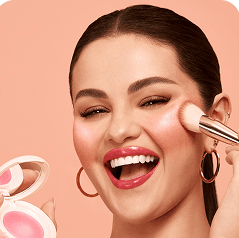
Rare Beauty
Soft Pinch Blush
« My holy grail »
My skincare routine
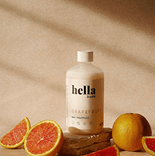
Hella
Grapefruit
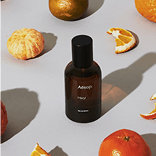
Aesop
Mandarin
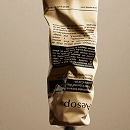
Dosage
Coffee
My essentials


Poll
Your skincare routine?
Mistakes to avoid
- Inflating your numbers. Brands cross-check the data; a fake engagement rate shows and burns your credibility.
- An unreadable kit. Too much text, no hierarchy: the brand gives up. Get to the point.
- Forgetting the contact. A media kit with no email or clear link is useless. Always end with a call to action.
- Never updating it. Refresh your stats and examples every two to three months.
And after your media kit?
A good media kit only opens the door: next, you need to know how to pitch your approach and negotiate. We cover all of that in our guide to landing your first collaboration.
In summary
An effective media kit fits into five blocks, introduction, stats, audience, examples, rates and contact, and stays honest, readable and up to date. Pair it with a polished link-in-bio page: the document convinces, the page proves. That's the combination that turns a curious brand into a partner.