
Learning how to monetize Instagram takes neither a big budget nor hundreds of thousands of followers: you need an audience that trusts you and a channel to turn that trust into income. The most accessible one is affiliate marketing, and it all starts with your link in bio.
The concrete ways to monetize Instagram
Several levers exist, and they stack. Here are the most realistic ones when you're starting out with no budget:
In practice, it depends on your niche. If you're a beauty creator, you recommend the palette or the skincare product you use daily, with your promo code. In lifestyle, it might be a storage basket or a décor accessory that keeps showing up in your content. In tech, a USB-C dock or a tripod you've actually tested. The rule is always the same: only recommend what fits your niche and what you use yourself, that's what makes every click credible, and therefore qualified.
- Affiliate marketing: you recommend a product through a unique link and earn a commission when your audience buys. No money upfront, and it works with a small community.
- Paid collaborations: a brand pays you to talk about its product in your content. You can land these by showing a polished recommendation page.
- Promo codes: a brand gives you a code to share; you earn a commission or a perk on the sales it generates.
- UGC (user-generated content): you create content (photos, videos) that a brand uses, paid per job, without even needing a big audience.
You don't have to do everything at once. The right move is to launch just one properly, then stack the others on top.
Why start with affiliate marketing
Affiliate marketing is the ideal starting point because it requires no stock, no budget and no partnership negotiated in advance. You recommend what you already use, and every qualified click can become a commission. It's also the foundation you build the rest on: once your page converts, brands notice you and collaborations follow. Better still, a well-placed card keeps generating commissions long after it's published, which makes it a genuine passive income for creators.
If you want the full breakdown of a creator's revenue levers, we've gathered the essentials in our guide to monetizing your audience.
On Spotilink, you build each card yourself, your photo, your take, your promo code, your affiliate link. The Free plan gives you 10 cards and 1 collab per month; the Creator plan (€9.90/month) goes unlimited, removes the watermark and adds advanced stats. Above all: 0% commission on your affiliate links and on free or off-platform collabs, you keep 100% of that income. For collabs settled through Spotilink (the "secure payment" option), 5% + fees apply, in exchange for guaranteed funds.
Instagram's native monetization tools (and their limits)
Instagram does offer a few in-house schemes, but you need to know what to expect. Badges (or gifts) let your audience support you live during a stream; Instagram subscriptions give access to members-only content for a monthly payment; the Instagram shop (Instagram Shopping) displays your tagged products right inside the app. On paper, it's appealing. In practice, these tools remain unevenly rolled out: not every account has access, the amounts are modest, and payouts depend on the platform's goodwill. So it's best not to build your income on them and keep them as a bonus. The reliable foundation is what you control: your recommendations and your affiliate links.
The role of Reels
Reels are currently the format that pushes your reach the furthest: the algorithm shows them beyond your followers, which makes them your best gateway to gaining visibility. Don't count on them for direct payouts, Reels bonuses are rare and unstable. Think of them instead as an audience magnet: a Reel that takes off brings new followers to your bio, and therefore to your recommendation page, where conversion actually happens.
Instagram's real problem: a single clickable link
Instagram gives you only one link in your bio. If you recommend ten products, you can't paste them all there. The result: most creators send their audience to a story or a DM, and lose clicks along the way.
The solution is to centralize your links behind that single link. A link-in-bio page gathers all your recommendations in one place, visible at all times. That's exactly what Spotilink does with your affiliate links: you arrange your cards into sections, and your audience finds all your recos at a glance.

Helena Yung
Beauty & Lifestyle
My favourite
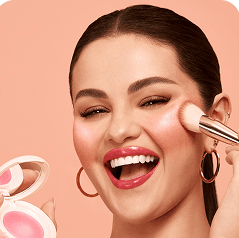
Rare Beauty
Soft Pinch Blush
« My holy grail »
My skincare routine
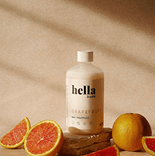
Hella
Grapefruit

Aesop
Mandarin
Dosage
Coffee
My essentials


Poll
Your skincare routine?
Turn your links into cards, not a list of bare links
A bare link says nothing: your follower doesn't know why you recommend that product. A recommendation card, your photo of the product, your honest take, your one-tap promo code, gives context and makes people want to click. That's the difference between a page people scroll past and a page that converts.
Link list
- My favorite serum
- Sephora promo code
- My YouTube channel
- My Vinted closet
The visitor doesn't know why to click.
Recommendation showcase
Rare Beauty
Soft Pinch Blush

Aesop
Glow serum
Every card gives a reason to click → more qualified clicks.
On Spotilink, these cards are 100% manual: you add your photo, your words, your code and your link. Nothing is auto-extracted, and there's no price shown, the goal is to recommend and send people to the brand's store.
How many followers do you need to start?
Fewer than you think. There's no official threshold for affiliate marketing: what matters is your engagement rate, not your raw follower count. An account of 2,000 people who are truly invested in your niche can generate more qualified clicks than an account of 50,000 passive followers. Start now: every card published early is an asset that will work for months.
The honest answer is "fewer than you think", and you can put a number on it: the creator page simulates what an audience your size could generate through a recommendation page. It is an estimate, not tracked revenue, but it settles the question of whether you are big enough to bother.
Knowing which of your recommendations actually earns
The step most creators skip, and the one that decides whether income grows or plateaus. If you can't tell which recommendation produced a result, every decision afterwards is a guess.
Instagram itself won't tell you. Its insights stop at your content: reach, saves, profile visits. The moment someone leaves for a merchant, the trail goes cold as far as the app is concerned. So the measurement has to happen on the page you send them to.
What's worth watching, in order of usefulness:
- Clicks per recommendation, not just total page views. Two products with the same exposure rarely get the same taps, and the gap tells you what your audience actually wants more of.
- Which content drove the visit. A spike after a specific Reel says more than a monthly total.
- Merchant-side conversions, from your affiliate dashboard. Clicks tell you about interest, the programme tells you about purchases, and the two rarely rank products in the same order.
Be clear about what any link-in-bio tool can and cannot see: it counts clicks, never sales, and never who clicked. Sales figures live with the merchant. Read them together and you stop rewriting captions on instinct.
Staying credible: only recommend what you use
Trust is your real capital. If you recommend anything for a commission, your audience feels it and you burn that capital in a few posts. The golden rule: only put forward products you genuinely use and stand behind. That's fewer cards, but cards that convert, and an engagement rate that holds over time. Also remember to disclose your affiliate links and collabs: transparency is both a legal obligation and a mark of seriousness.
What about other platforms?
The same logic applies elsewhere: centralize your links and craft your recos. If TikTok is your main turf, take a look at our sister article on monetizing your TikTok account, the levers are close, but the habits differ.
In summary
Monetizing Instagram doesn't depend on your budget but on your ability to turn your trust into clicks. Start with affiliate marketing, turn every reco into a convincing card, and centralize everything behind your single link in bio. Collaborations, promo codes and UGC will follow naturally, once your storefront is in place.