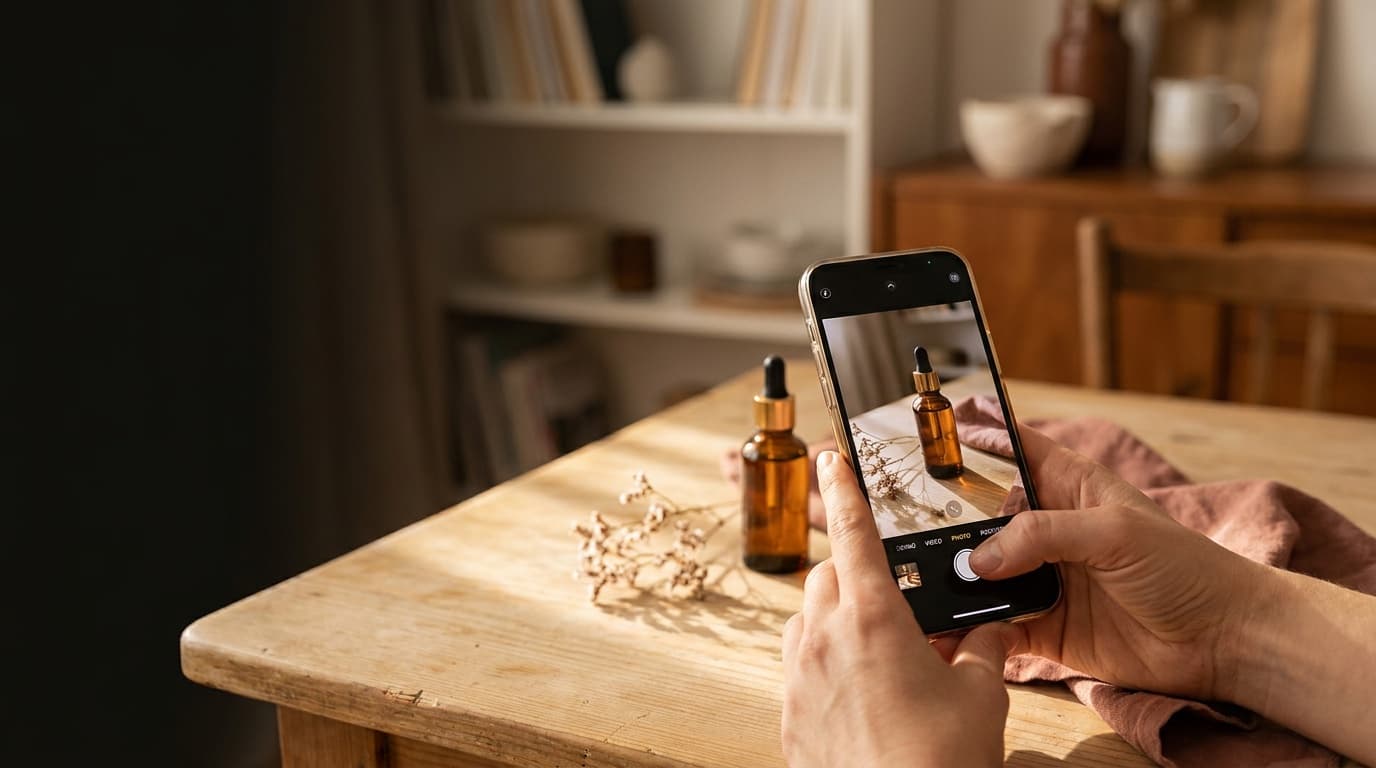
You already share products you love with your audience. At some point, a brand offers to pay you to feature one, or you wish one would. That's a brand deal: a brand pays you for visibility on your content or your page. It's one of the most concrete creator revenue streams, right alongside affiliate marketing.
What is a brand deal?
A brand deal is any paid partnership between you and a brand: the brand pays you (in money, sometimes a free product) to feature its product. A sponsored post, a paid partnership and a product placement are all forms of the same thing, content or visibility in exchange for a fee.
The difference with affiliate is simple: with affiliate, you earn a commission if your audience buys. With a brand deal, you earn a fixed amount agreed upfront for the spot, whatever the sales. The two stack, and that's the ideal.
Brand deal, sponsored post, paid partnership: the words creators use
The word changes, the idea stays the same:
- Brand deal: the umbrella term for any paid creator–brand partnership.
- Sponsored post: a piece of content published specifically for pay, a post, story or video.
- Paid partnership: the « contract » version, often a longer or multi-post deal.
- Product placement: the product simply appears in your content or on your page.
Whatever word the brand uses, you're offering visibility to your audience, and you're paid for it.
The types of brand deals you can land
Not every brand deal looks the same. The main formats, from easiest to most involved:
- Gifting (product seeding). The brand sends a free product hoping you'll post. No guaranteed pay, but it's often how a relationship starts.
- Sponsored post. You're paid a fixed fee to publish a specific piece of content, the bread-and-butter deal.
- Affiliate deal. You're paid per sale via a tracked link or code, on top of (or instead of) a flat fee. It rewards performance.
- Ambassadorship. A longer commitment, several posts over weeks or months, usually at a better rate and with more stability.
- UGC (user-generated content). You produce content the brand uses on its own channels; you don't even need a big audience, just good content, and you're paid per delivery.
Most creators mix a few: a gifted product that turns into a paid post, then an ambassador deal once the brand sees results.
What brands are actually paying for
It helps to know what's on the other side of the table. Brands aren't buying your follower count, they're buying trust and attention they can't manufacture with ads: a recommendation from someone their target audience already believes. They also pay for usage rights (reusing your content in their own ads) and for fit, a creator whose niche and values match theirs. That changes your pitch: you're not renting out space, you're offering a trusted voice to an audience that's hard to reach otherwise.
How to get brand deals
Brands don't pay for an audience, they pay for an audience that trusts you. Here's the order that works:
- Polish your page. Before you pitch anyone, turn your link in bio into a credible storefront: real reco cards, clear sections, your honest takes. It's the first thing a brand looks at, and it's the whole point of Spotilink for creators.
- Prepare a short media kit. A page that sums up who you are, your audience and your formats, we cover it in our guide to building your media kit.
- Target 5 to 10 brands you already use. Authenticity shows: a brand you've genuinely recommended for months is far easier to win over.
- Pitch short. Two lines: who you are, why the product fits your audience, what you're offering. The step-by-step is in our guide to landing your first collaboration.
And the secret nobody says: a polished page makes brands come to you. Many first deals come from a brand that spotted a clean, engaged reco page.
Where to find brand deals
Beyond pitching brands you already use, two channels multiply your chances:
- Creator marketplaces. Platforms where brands post campaigns and creators apply, a steady stream of small-to-mid deals once you have some traction.
- Agencies and PR firms. Many brands outsource influencer campaigns; getting on an agency's radar can unlock repeat work.
Don't wait to be "big enough": micro and nano creators land deals every day because their engaged, niche audiences convert.
How much should you charge?
There's no official rate card. Your price for a sponsored post or placement depends on your niche, your engagement (not just your follower count) and the deliverable. The right move: set a rate you're comfortable with, state it clearly, and adjust with experience. A clean, confident rate beats a fuzzy negotiation restarted from scratch with every brand.
As a rough compass (rates vary wildly by niche and country): nano creators (1–10K) often see €50–€200 per sponsored post, micro creators (10–100K) €200–€1,000, with more for video, exclusivity or usage rights. Treat these as starting points, not a ceiling, and never quote before you know the deliverables.
The terms you'll negotiate
Price is only one line of a deal. Before you say yes, agree in writing on:
- Deliverables, exactly what you'll post: how many pieces, on which platforms, in what format, with which links or codes.
- Usage rights. Can the brand reuse your content in its own paid ads, and for how long? Broad or long usage should raise your rate.
- Exclusivity. Are you barred from working with competitors, and for how long? Exclusivity has real value, charge for it.
- Timeline. Posting dates, review rounds and revisions, so a "quick collab" doesn't drag on for weeks.
- Payment terms. When and how you're paid (a deposit up front is fair on bigger deals), and what happens if the brand cancels.
Getting these on paper protects both sides, it's exactly what separates a hobby from a business.
Deals to walk away from
Not every offer is worth taking. Common red flags:
- "Pay" in exposure only. A gifted product is fine as a start, but "we'll repost you" is not payment for real work.
- Unlimited or perpetual usage rights bundled into a small flat fee, your content running in their ads for years is worth far more.
- No contract, vague deliverables, or "just post whenever." Fuzzy terms end in unpaid work and scope creep.
- A product you wouldn't recommend for free. One bad promo can cost you the audience trust that makes you valuable in the first place.
Saying no to a bad deal protects the asset every good deal depends on: your credibility.
Run your brand deal cleanly, on your page
This is usually where it gets messy: endless emails, a twelve-page brief, and above all the payment question, a brand that's slow to pay, and you chasing your money.
Spotilink turns that into a clear offer, right on your page: you create a collaboration offer (spot, duration, price), the brand submits its visuals, you approve, the deal goes live with a Collab badge. It's included from the free plan (1 collaboration per month, unlimited on the Creator plan).

Helena Yung
Beauty & Lifestyle
My favourite
Rare Beauty
Soft Pinch Blush
« My holy grail »
My skincare routine
Hella
Grapefruit
Aesop
Mandarin
Dosage
Coffee
My essentials


Poll
Your skincare routine?
For payment, you choose. Directly with the brand: Spotilink takes nothing, you keep 100%. Via Spotilink secure payment: the funds are held and paid out to you at the end, for a 5% service fee + Stripe fees. No more chasing an unpaid invoice.
Brand deals and affiliate stack up
Don't choose, combine. Affiliate keeps your page working every day, each click to the shop can become a commission, with no guaranteed amount. Brand deals add higher one-off income, paid upfront. One page carries both: your affiliate links gathered into cards day to day, and a spot reserved for a sponsored placement when a brand wants visibility. For the full picture of creator income, see our guide to monetizing your audience.
Deliver well, and turn one deal into recurring income
Landing the deal is half the job; keeping the brand is where the money is. A few habits make brands come back:
- Communicate clearly and hit deadlines. Being easy to work with is the top reason brands rebook a creator.
- Deliver on the brief, then add a little extra, an unexpected story or angle shows you care about their result, not just the fee.
- Report your performance. A short recap (reach, clicks, saves) turns a one-off into proof for the next deal, at a higher rate.
- Stay yourself. Sponsored content that still sounds like you keeps your audience's trust, and, with it, your value to brands.
Do this and a first "yes" becomes a retainer or an ambassadorship: steady monthly income instead of chasing a new deal every month.
Disclosure is non-negotiable
Any paid partnership must be clearly labeled to your audience (« paid partnership », « ad »). It's not optional: it's the law in most countries, and it's also what protects the trust that makes you valuable. For taxes, a brand deal is professional income you must declare. For your specific situation, check with a local accountant or tax authority.
In short
A brand deal is the moment your community becomes a real media outlet. Start with a page that earns trust, set a clear offer, put the deal in writing and secure the payment. Combined with affiliate, it's what turns your link in bio into steady income, not just one more link.