Monetize your content: the creator's 4 models
Monetizing your content means turning your audience's attention into income, without depending solely on the platforms. For a content creator, there are four major models, affiliate marketing, brand collaborations, products/courses and UGC, and the fastest to launch is still affiliate marketing. This guide gives you the full picture and tells you where to start.
The 4 revenue models of a creator
No creator lives off a single channel. Most stack several sources that reinforce one another. Here are the four pillars, from the most accessible to the most demanding. For the full fundamentals of the fastest channel, see our guide to affiliate marketing for creators.
| Model | Accessibility | Setup effort | Revenue ceiling |
|---|---|---|---|
| Affiliate marketing | Immediate, from a small audience | Low | Medium |
| Collaborations | From a clear editorial line | Medium | Medium to high |
| Products / courses | Established audience required | High | High |
| UGC | Immediate, even without an audience | Medium | Medium |
1. Affiliate marketing, the starting point
You recommend products you use through unique links, and you earn a commission on every sale. Zero product to create, zero stock, zero customer service. It's the fastest channel to launch, and it works from a small audience.
- Ballpark: commissions often run from a few percent to 10-20% of the sale amount. Your earnings mostly depend on the number of qualified clicks you generate.
- For whom: everyone, from the first followers.
For the full fundamentals, we have a dedicated guide to affiliate marketing for creators.
2. Brand collaborations
A brand pays you to create content or talk about its product. It's often the first "visible" revenue source beyond affiliate marketing.
- Ballpark: highly variable. Rates depend on your niche, your engagement and the format. A nano or micro engaged audience can already land one-off collabs, sometimes in exchange for products at first, then paid.
- For whom: as soon as you have a clear editorial line and real engagement.
3. Products and courses
Your own product: ebook, preset, course, template, subscription. The margin is the highest, but it's also the model that takes the longest to set up.
- Ballpark: potentially high income once the product is created, but it demands an audience that trusts you and production time.
- For whom: creators with an established community and expertise to package.
4. UGC (User-Generated Content)
You produce content for brands (which they distribute themselves on their own accounts or as ads), without necessarily having a big audience. It's a production craft, not an influence one: you sell your ability to shoot, edit and tell the story of a product, not your reach. Concretely, a beauty brand commissions three "unboxing + routine" videos, a tech brand a hands-on camera test, a lifestyle brand a "day in the life" format, and you deliver footage ready to publish.
- Ballpark: paid per job or per batch of videos, negotiated in advance. Accessible even with few followers, because the brand buys your know-how, not your follower count.
- For whom: creators comfortable on camera who want to monetize without depending on their own audience, or to top up their affiliate income between collabs.
- The smart combo: what you test for UGC, you can also recommend through affiliate marketing on your link-in-bio page, a single shoot feeds two revenue sources.
You don't have to pick a single model. Most creators start with affiliate marketing (fast, no risk), add collabs, then a product. And you keep your income: 0% commission on affiliate marketing and on free or off-platform collabs; for secure collabs through Spotilink, 5% + fees apply.
How much does each model pay at the start?
Nobody can promise you a number: creator income depends on your niche, your audience and your consistency. We can still give cautious ballparks for the start. In affiliate marketing, the first weeks often hover around a few dozen euros a month, while your cards accumulate clicks. Collabs frequently begin in exchange for products, then get monetized at a few dozen to a few hundred euros per post depending on your engagement. Products and courses pay nothing until they're launched, but can then surpass every other channel. UGC is negotiated per batch of videos, independent of your audience size. The order is what to remember: affiliate marketing pays small but fast, products pay big but late.
Where to start: affiliate marketing via the link in bio
If you're starting out, don't scatter your energy. The fastest start is affiliate marketing centralized on your link-in-bio page:
- Recommend what you already use (beauty, tech, lifestyle…).
- Sign up for one or two affiliate programs.
- Turn each reco into a card, your photo, your take, your promo code, your link, rather than a bare link.
- Centralize everything behind your single Instagram or TikTok link.
That's exactly the role of Spotilink, which gathers your affiliate links into a recommendation storefront. You build each card yourself: no auto-extraction, your take stays your voice.
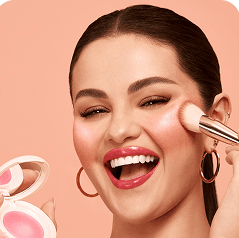 -10%
-10%Rare Beauty
Soft Pinch Blush
“My must-have blush: one swipe and it lasts all day.”
Adapt your strategy to your platform
Each network has its levers. The content that converts on Instagram isn't the same as on TikTok.
- On Instagram, it all starts with the bio and the stories: we cover everything in our guide to monetizing your Instagram account.
- On TikTok, it's view volume and virality that make the difference: see monetizing your TikTok account.
- And to make your recommendations work over time, without starting from scratch every month, read our take on passive income for creators.
How long before the first euros?
Be patient and cautious: monetization follows consistency, not the other way around. Many creators see their first affiliate commissions as soon as they centralize their links properly, but the amounts stay modest at first. Collabs and products come next, once trust is established. Be wary of promises of fast, precise income: nobody can guarantee you a number.
Get the legal basics right
All this income is taxable revenue. In most countries the simplest path to start is registering as self-employed (a sole proprietorship or equivalent), which is more than enough at the start, but the exact status (sole proprietorship, LLC, etc.) and the thresholds vary by country, so check your local tax authority or an accountant. Also think about transparency: disclosing an affiliate link or a paid collab is a legal obligation in most places, and a mark of trust either way.
Passive income: your long-term model
When you stack affiliate marketing + collabs + products, a growing share of your income becomes passive, generated without daily intervention. The recommendations placed on your link-in-bio page, once built, keep converting 24/7: a visitor clicks your card, buys from the brand, and your commission lands while you sleep. That's the big difference with a one-off collab, paid a single time. To turn your recos into a lasting asset, read our take on passive income for creators.
Stacking the models over time
Diversification isn't a starting goal, it's a trajectory. The healthy move: launch affiliate marketing alone, stabilize it, then add one brick at a time, first collabs when brands notice you, then a product when your community is established. Stacking too early scatters your energy; stacking too late caps your income. To steer that mix without getting lost, centralize everything in one place: your link-in-bio page acts as a dashboard where you arrange your cards by section and, thanks to click stats, you spot what really converts. You then know where to push your effort the following month, instead of guessing.
Build your storefront this weekend
You don't need to wait until you have 100K followers. Launch your affiliate page now, 10 free cards, 0% commission on your affiliate marketing, you keep 100% of your affiliate earnings. Create your Spotilink storefront and start recommending as soon as tomorrow.
In summary
A creator doesn't live off a single channel: they stack affiliate marketing, collabs, products and UGC. The fastest to launch, and the one to start with, is affiliate marketing centralized on your link-in-bio page. Turn every recommendation into a convincing card, centralize everything in one place, and let your recos convert on your behalf, while you build the more demanding models on top.