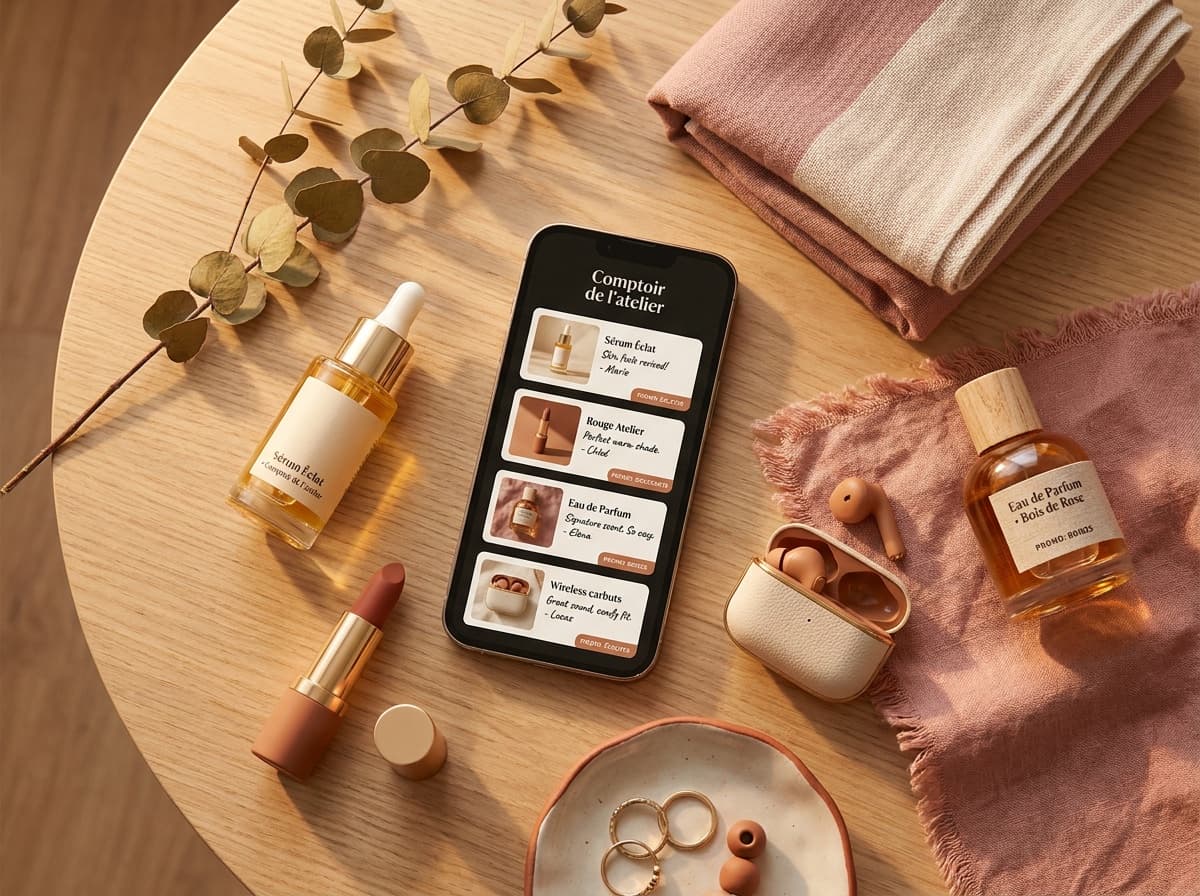
Here is how to make a Linktree in about five minutes: create an account, add your links, pick a theme, then paste your new URL into your bio. Here's the full walkthrough, what the free plan actually gives you, and why some creators who sell through affiliate links end up switching the format entirely.
What is a Linktree, and what does "making one" actually involve?
A Linktree is a single page that sits behind the one clickable link Instagram and TikTok give you in your bio. Instead of picking just one destination, that page fans out to several: your shop, your latest video, your other accounts, whatever you want a visitor to reach next. "Making one" really means three things: an account, a set of links, and a look. None of it requires code or a website of your own.
How to make a Linktree, step by step
- Create your account. Head to linktr.ee, click "Sign up" and choose a username, it becomes your public URL (
linktr.ee/yourname). Pick the free plan when prompted. - Add your links. From the dashboard, click "Add link", paste the destination URL and write a clear title for each one ("My Sephora code", "Latest video"…). Repeat for every link you want visible.
- Pick a theme. Open the design tab and choose a background, a button style and a font from the free theme library, then add your profile photo and a one-line bio.
- Get your URL and QR code. Your page goes live the moment you save, at
linktr.ee/yourname. The share menu also gives you a free QR code if you want a scannable version for a printed flyer, a story or a physical product. - Share it in your bio. Copy the URL, open your Instagram or TikTok profile, tap "Edit profile", and paste it into the "Website" field. Save, and the link becomes tappable under your bio.
That's a working page, live in under five minutes, without entering a card number.
How to add your Linktree to Instagram and TikTok
Creating the page is only half the job, you still have to make it clickable in your bio.
On Instagram: open your profile, tap Edit profile, paste your Linktree URL into the Website field, and save. It becomes a tappable link under your bio.
On TikTok: go to Edit profile and add your Linktree URL to the Website field. A clickable bio link usually requires a free Business account (Settings → Account) and, in some regions, a minimum follower count, otherwise paste the URL as plain text for now.
The upside of one page for both networks: whenever you add or reorder links inside Linktree, your bio link stays the same, so you never touch your profile again.
Your Linktree link won't work on TikTok?
This is the most common snag, and it's almost never Linktree's fault. TikTok gates the clickable bio link, so the field you need to paste into may simply not exist on your account yet.
There are two ways to unlock it, and either is enough:
- Switch to a Business account, free, in Settings and privacy then Account. It opens the Website field with no follower minimum. The trade-off is a smaller commercial-use music library.
- Reach the eligibility threshold on a personal account, historically around 1,000 followers, and varying by country.
While you wait, paste the URL as plain text in your bio. It won't be tappable, but people can copy it, and it becomes clickable later without you changing anything.
If the field does exist and the link still misbehaves, check the URL starts with https://, that you actually saved, and that you pasted into the Website field rather than the bio text. A URL typed into the bio text is never clickable on any platform.
Is Linktree free? What the free vs. paid plans cover
The free plan is real and permanent, not a limited trial. It includes unlimited links, a basic theme, your linktr.ee URL, and simple click stats. Linktree has also added a few free-tier extras in 2026: basic product cards and lightweight analytics are no longer locked behind a paywall the way they once were.
What stays behind a paid plan: removing the Linktree logo from your page, deeper analytics (traffic sources, click rate per link, history over time), scheduled or expiring links, and more advanced design controls like custom fonts and animations. Paid tiers run roughly $8 to $35 a month depending on which one you pick, and pricing shifts over time, so check Linktree's own page for the current numbers before you commit.
The catch for creators who sell: commissions and bare links
Linktree in 2026 does have product cards and free analytics
To be factual about it: Linktree isn't the bare button list it was a few years ago. It ships with lightweight product cards and basic analytics on the free tier now, closing part of the gap that used to push affiliate creators elsewhere.
Where it costs you: up to 12% taken on commerce, vs. 0% on your affiliate earnings
The gap that's left is the money one. If you sell through Linktree's built-in store or accept tips, it takes a seller fee, up to roughly 12% on the free plan, dropping as you move up tiers, on top of whatever you're already paying in subscription. That's separate from your regular affiliate commissions (the cut a brand pays you for a sale), which Linktree doesn't touch, it only applies to sales processed through its own checkout.
Spotilink takes a different position on this: it isn't a store at all. It drives clicks to your existing affiliate links, and takes 0% of your affiliate commissions, on the free plan or the paid one. There's simply no Spotilink checkout to take a cut of.
A simpler alternative: build a hand-made recommendation page instead
The format is the other half of the story. A Linktree entry is a title and a URL, useful for "here's my shop" but it doesn't explain why a specific product is worth clicking. A hand-made recommendation page swaps that button for a card: your own photo of the product, a line in your own words on why you use it, a click-to-copy promo code, and your affiliate link, deliberately with no price shown, so the card's whole job is earning a qualified click to the merchant rather than reading like a price tag.
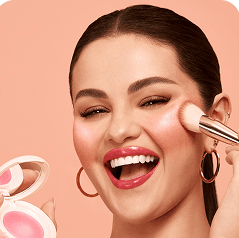 -10%
-10%Rare Beauty
Soft Pinch Blush
“My everyday blush, one sweep and it lasts all day.”
Stats on a card-based page like Spotilink's stay at clicks only, never a sales figure or a euro amount, the same honest scope as Linktree's own basic analytics, just applied to a format built for recommending rather than listing.
How to make your link-in-bio with Spotilink in 15 minutes
- Create your free account. Sign up, pick your handle, your page is live at
spotilink.bio/yourname. - Add your first product cards. For each recommendation, upload your own photo, write your take in your own words, and drop in your promo code and affiliate link.
- Group them into sections. Arrange cards under themes, "Skincare", "My go-to tech", whatever matches how you actually talk about products.
- Share your link. Paste your
spotilink.bioURL into your Instagram or TikTok bio the same way you would a Linktree URL.
The free plan gives you 10 product cards, a custom URL, and basic click stats, with a small "Created with Spotilink" watermark, the same trade-off that funds any free link-in-bio tool. The Creator plan at €9.90/month removes the watermark and unlocks unlimited cards, paid brand collabs and deeper insights (click-through rate, conversion, monthly growth).
Linktree vs. a hand-made vitrine: which should you make?
| Spotilink | Linktree | |
|---|---|---|
| Free planOur tool | Yes, generous (custom URL included) | Yes |
| Format | Photo + your words + promo code cards | Titled buttons, basic cards |
| Commission on your affiliate earnings | 0% | 0% (affiliate links untouched) |
| Fee on in-app commerce/tips | No built-in store | Up to ~12%, tier-dependent |
| Custom URL on free plan | Yes | No, paid plans only |
| FR/EU hosting, GDPR-first | Yes | Not the primary market |
If your only need is "collect a handful of links in one place", Linktree's free plan covers that fine and there's no reason to rebuild it elsewhere. If you're recommending products, beauty, lifestyle, tech gear, with affiliate links and promo codes, a page built around cards rather than buttons is doing part of the persuading a bare title never can.
Linktree examples worth studying before you build yours
Before you fill in your own links, it helps to look at what actually works on other people's pages. A few patterns show up again and again on the Linktree examples that convert well:
- The title does the selling, not the link itself. "Shop my faves" tells a visitor nothing; "My skincare routine, 3 products I use daily" gives them a reason to tap. The best-performing pages write titles the way they'd describe the link out loud to a friend.
- Priority order matters. Whatever you most want clicked, a current promo code, your newest video, goes at the top. Attention drops fast the further a visitor scrolls, so don't bury the link that matters behind five that don't.
- The theme matches the niche, not just the brand colors. A minimal black-and-white theme reads differently to a beauty audience than a bright, playful one does. Match the visual tone to what your specific followers expect to see, not a generic default.
- Fewer, better-labeled links beat a long list. Pages with 6 to 10 clearly titled links usually out-convert pages with 20+ generic ones, a wall of similar-looking buttons makes visitors give up scanning before they find what they want.
None of that requires a paid plan, it's entirely about how you use the free tier. The same principles carry over directly if you move to a card-based format: a clear photo and an honest one-line take on why you use a product do the same job a well-written title does on a plain link.
Common mistakes to avoid when you make your Linktree
A few small errors quietly cost clicks on an otherwise fine page:
- Leaving the default title on a link. "Link 1" or a raw URL as the title gives a visitor zero reason to tap it. Rewrite every title before you publish.
- Adding every link you own. More isn't better past a point, ten well-chosen links beat twenty-five, especially on mobile where scrolling itself is friction.
- Forgetting to check it on your own phone. Preview your page from the actual bio link before you tell anyone about it, broken formatting or an unreadable theme color is easy to miss on desktop.
- Never updating it. A page that still promotes a promo code that expired three months ago erodes trust fast. Treat your bio link like any other piece of content that needs occasional upkeep.
- Picking a username you'll regret. Your
linktr.ee/usernamebecomes part of your brand the moment you share it in a bio, keep it short, consistent with your handle elsewhere, and easy to say out loud.
Start free in 15 minutes
Both routes are free to start, no card, no trial clock running out. Making a plain Linktree takes five minutes and does the job if you just need a hub of links. If your bio's real job is turning recommendations into affiliate clicks, building your first product cards takes about 15 minutes, and the full Linktree alternatives comparison covers the other options if you want to weigh more than one.